
Sarwar Noori👋
A Data Analyst specializing in data management, business analytics, and financial operations.
Follow Me
Benefits of the Hospital Dashboard
Every day in the emergency room used to feel unpredictable. Patients kept arriving, and the staff struggled to keep track. However, once the dashboard was introduced, everything started to change.
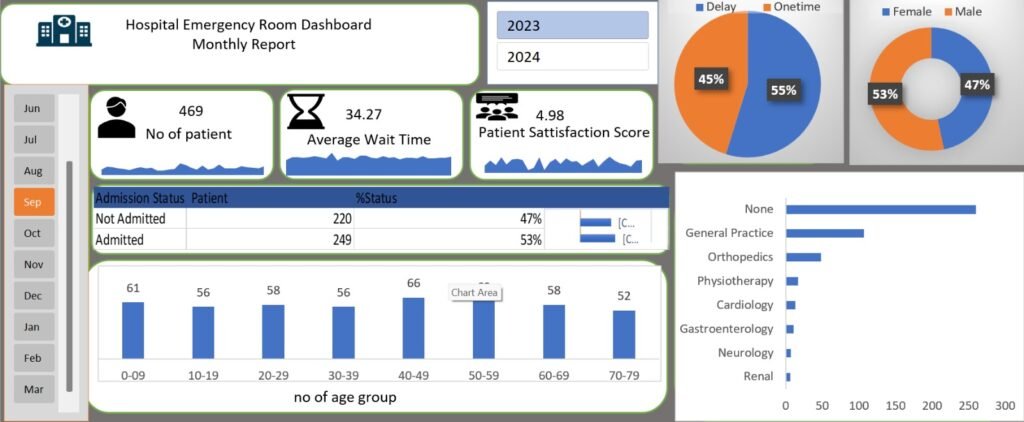
Now, the hospital administrator begins the day with a quick glance at the system. Instantly, he sees total patients, wait times, and satisfaction scores. As a result, decisions happen faster and with more confidence.
Earlier, long waiting times created frustration. Patients often felt ignored during busy hours. However, the dashboard clearly showed average wait times. Therefore, the hospital adjusted staff shifts during peak periods.
The team also struggled to understand patient flow. Some departments felt overloaded, while others stayed underutilized. With the new dashboard, department-wise data became visible. Consequently, resources were distributed more effectively.
Even patient satisfaction improved over time. Because feedback was tracked regularly, small issues were fixed quickly. In addition, staff became more aware of patient experience.
Overall, the hospital moved from reactive chaos to proactive management. And that shift improved both care and efficiency.
Results Achieved from the Project
Within a short time, the impact became clear. Patient handling became smoother and more organized. As a result, the emergency room felt less stressful for both staff and patients.
Waiting time started to stabilize. Because peak hours were identified, staff allocation improved. Therefore, patients received faster attention.
Admission decisions also became clearer. The hospital tracked admitted and non-admitted cases easily. Consequently, patient flow management improved significantly.
The satisfaction score showed steady improvement. Patients felt heard and treated faster. As a result, trust in the hospital increased.
Department workload became more balanced. High-demand areas like general practice received more focus. Meanwhile, less busy departments were optimized.
Most importantly, the hospital gained control. Decisions were no longer based on assumptions. Instead, every action was guided by real-time data.
In the end, the emergency room didn’t just handle patients better. It delivered faster care, improved experiences, and stronger overall performance.
Collaborate, 👋
Let’s turn data into smarter decisions together!
Ready to elevate your business? I specialize in turning data into powerful insights that drive growth and smarter decisions. Let’s transform your data into real results!